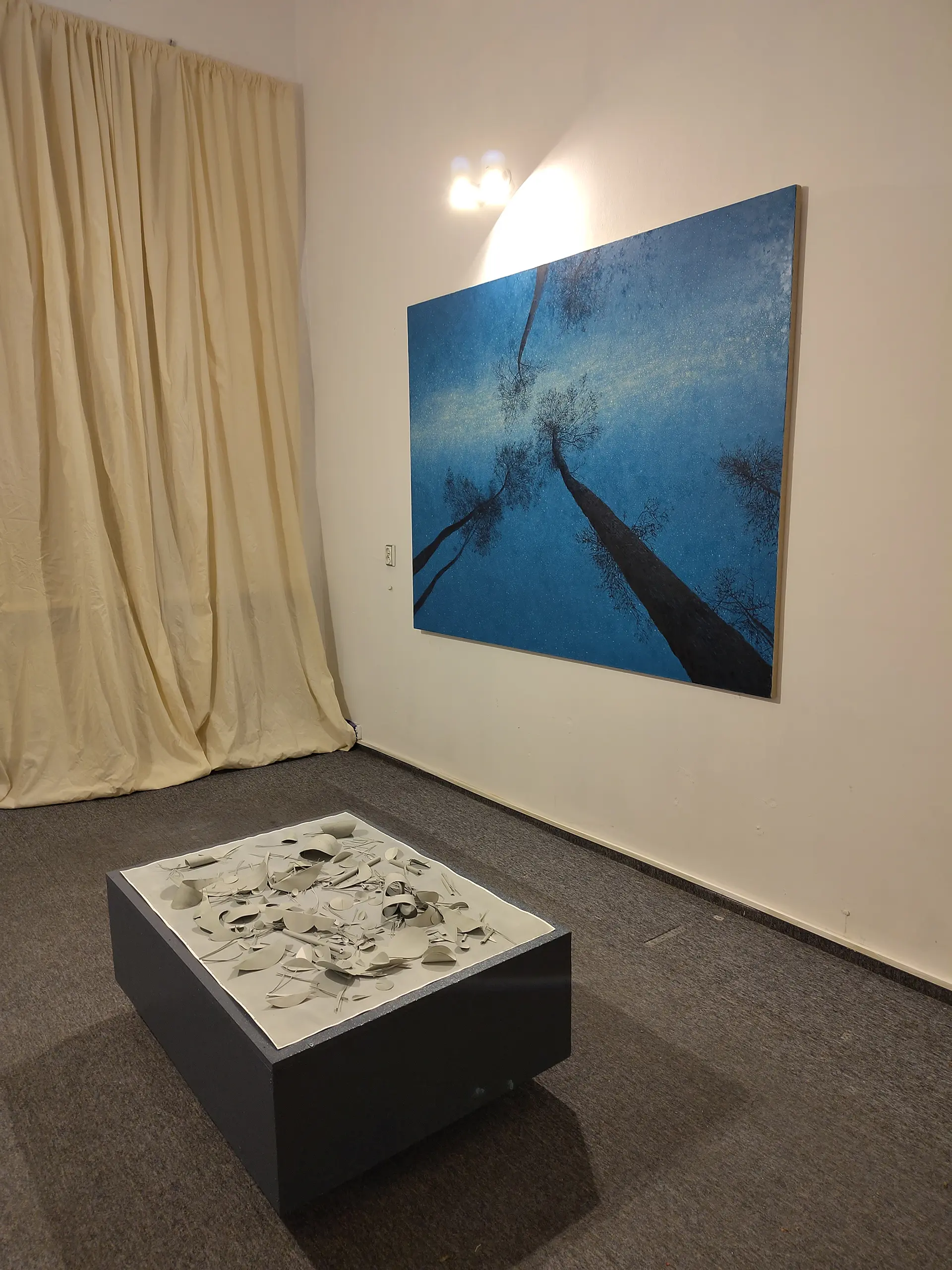
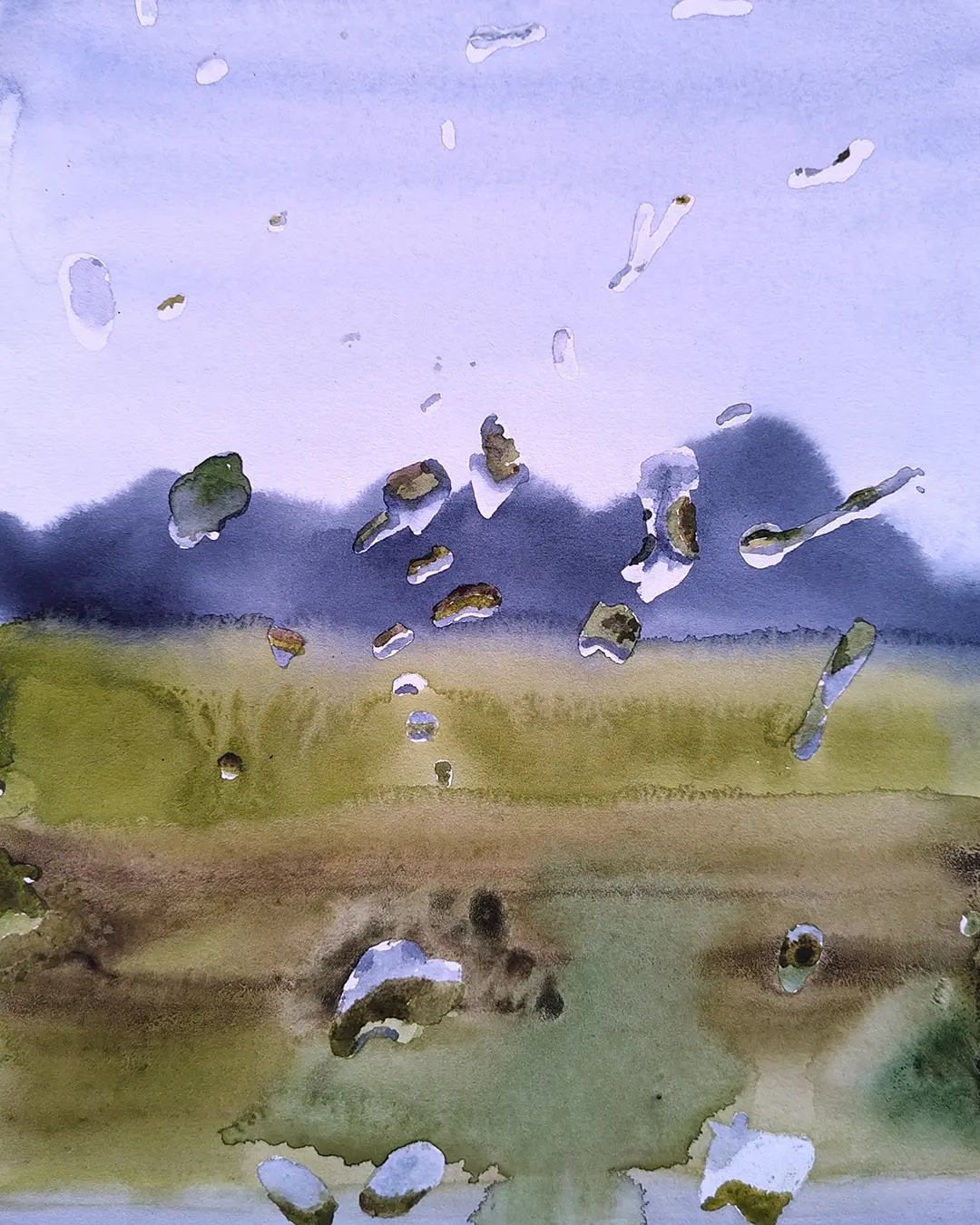
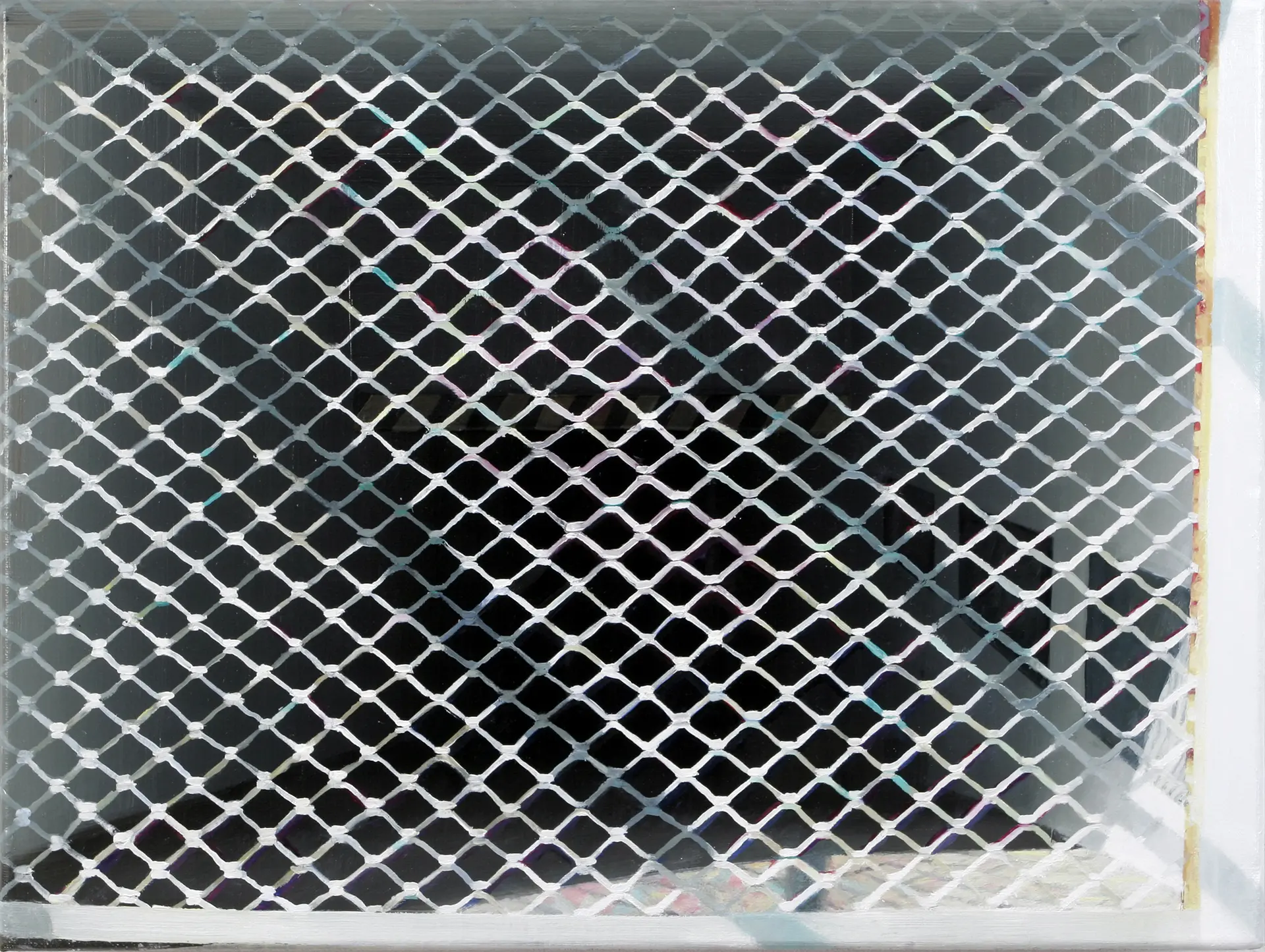
Exhibition staged as part of the Open Eyes Art Festival 2025. Oceans of Drops, ul. Kopernika 21, 2025
Curator: Zofia Małysa-Janczy
Exhibition design: Kaja Gliwa
Artists: Michalina Bigaj, Rafał Borcz, Marcin Dymek, Joanna Kaiser, Maja Krysiak, Grzegorz Kumorek, Krzysztof Maniak, Agnieszka Piksa (together with Miejska Partyzantka Ogrodnicza), Katarzyna Skrobiszewska, Michał Sroka, Radek Szlęzak, Piotr Urbaniec, Bartosz Wajer
At the threshold of modernism, the visual arts saw a proliferation of studies in movement—human, animal, and mechanical. Speed and progress. Minor gestures and monumental strides alike, all oriented toward a radiant future. If the modernist paradigm was governed by the imperative of perpetual motion, the final phase of postmodernism is instead defined by an accumulation of studies in stillness. Bodies settle into a horizontal orientation.
Stillness may be an effect of passivity, yet in the works presented here, passivity frequently proves deceptive. During sleep—an activity deemed unproductive by the logic of a 24/7 economy—oneiric images are generated. REM sleep becomes a quiet luxury, something one pays extra for, like a room with a sea view. The body enters a state of temporary paralysis, while the brain operates at heightened intensity. Subjects position themselves parallel to the ground, driven by a desire for rest, contemplation, and attunement with nature, but also by powerlessness. Those searching for places to lie down often retreat with their bodies from the noise of the city. Where a deer lay at dawn, weary backs will settle by evening. The point of reference for the artistic practices on view shifts to ground level or the surface of water. Structures of hierarchy gravitate towards the horizontal. A change in posture compels a change in perception. The horizon moves closer—then vanishes.
While lying down, one carries out operations in space and attempts to probe both animate and inanimate matter. Subversive manifestos are read while lying down. Points of support are not always comfortable. Discomfort is compensated by the smell of soil. Informal, off-system networks of exchange of goods flourish on wastelands. The peripheries turn into centres where pacts are forged and agreements sealed with a stick on sand. Here, an acceptance of impermanence is indicative of a willingness to embrace the incidentality of life and an awareness of the body’s fragility. Breathless human and non-human bodies are understood as repositories of memory—objects of vigilance or of climate mourning.
Some cannot fall asleep; others do not want to wake up.
Zofia Małysa-Janczy